
 November 25, 2026
Back Pain and Pregnancy Travel: Staying Comfortable on Long Drives and Flights from Longmont
Holiday travel season often means hours in a car seat or an airplane seat, and that can be a lot to ask of a pregnant body. If you are planning a trip from Longmont, a little preparation may help you feel more comfortable along the way. Here is a clear, practical roadmap for back pain pregnancy travel.
Why Sitting for Hours Can Bother Your Back in Pregnancy
Long stretches of sitting hold your spine and hips in one position. During pregnancy, your center of gravity shifts forward, ligaments soften under the influence of pregnancy hormones, and your core muscles lengthen. Together, these changes can make a fixed seated posture feel more tiring than it did before.
Travel adds a few extra factors: vibration from the road, cramped legroom, seat shapes that do not suit your curves, and fewer chances to change position. Many people notice stiffness in the low back, tightness through the hips, or achy buttocks and thighs after a long sit. If you want background on why the low back is so often involved, our post on why lower back pain happens during pregnancy covers the basics.
Set Up Your Seat Before You Go
A few small adjustments can change how a seat feels. Try these in the car, and adapt them for a plane seat where you can:
- Sit all the way back. Keep your hips against the seat back so your pelvis is supported.
- Add lumbar support. A small rolled towel or a pregnancy-friendly cushion can support the natural curve of your low back.
- Tilt the seat slightly back. A gentle recline of about one to two notches can take some load off your spine.
- Keep knees level with or just below your hips. A small footrest or bag under your feet can help on a plane.
- Wear your seat belt correctly. The lap belt goes under your belly across your hips, and the shoulder belt goes between your breasts and to the side of your belly. The CDC's guidance on car seat belts during pregnancy explains this in more detail.
If pain keeps building even with a good setup, that is useful information to share with a provider before you travel.

Move Often: A Simple Break Routine
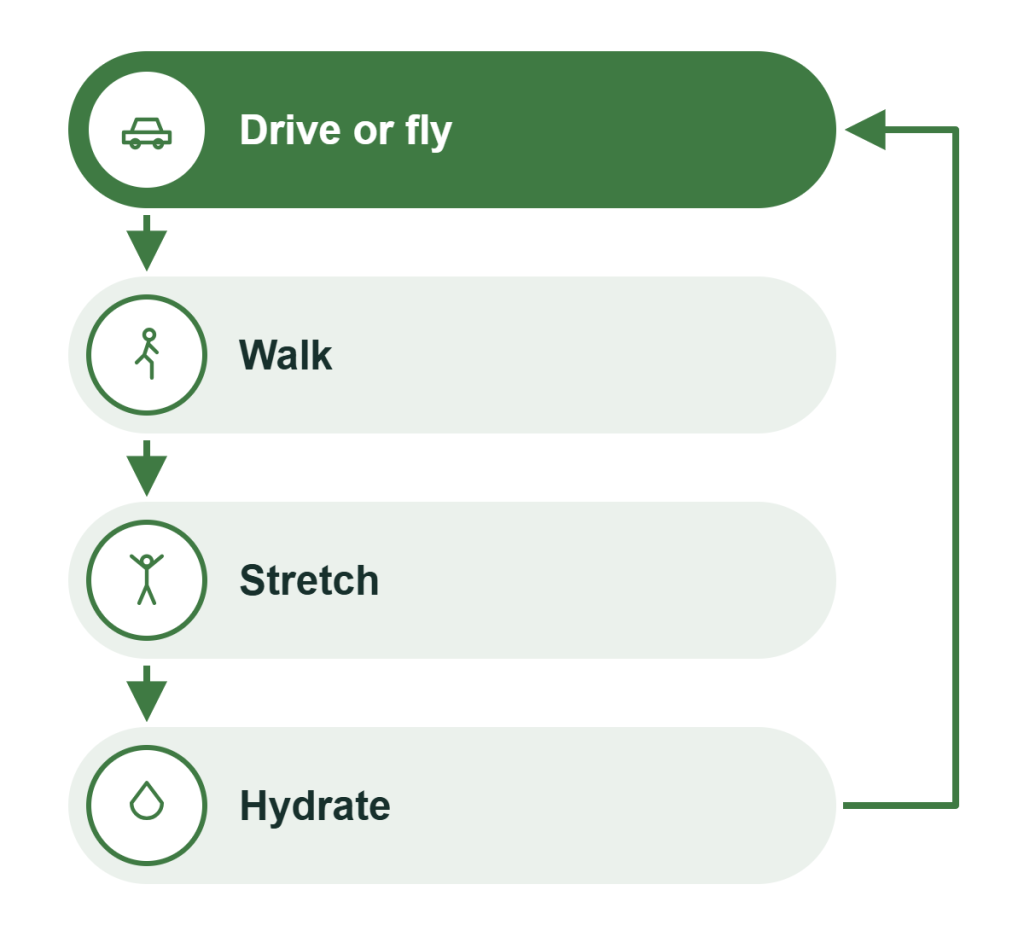
Changing position regularly is one of the most helpful things you can do. On a drive, plan a stop roughly every one to two hours. On a flight, stand and walk the aisle when the seat belt sign is off, and check with your obstetric provider about what is right for you.
At each stop, try this short routine:
- Walk for a few minutes to get blood moving through your legs.
- Do gentle standing hip circles, holding the car or a wall for balance.
- Try a standing cat-cow with your hands on the car, rounding and arching your back slowly.
- Drink some water and use the restroom.
In your seat, you can also do ankle circles and gentle pelvic tilts. Stay within a comfortable range and stop any movement that causes sharp pain.
How Chiropractic Care May Help Before and After a Trip
At Left Hand Chiropractic Center, we use the Left Hand Method: Listen, Assess, Map, Care or Connect, Review. For a pregnant patient planning travel, that means we listen to your concerns, assess how your spine, pelvis and hips are moving, and map out clear next steps.
When clinically appropriate, gentle chiropractic care may help support comfort and mobility, and we can teach you stretches and positions to use on the road. Dr. Christine Illman, DC, and our team tailor care to each stage of pregnancy. Our pregnancy and postpartum care page explains what a visit may look like.
We are also honest about fit. If your symptoms point to something another provider should evaluate, we will refer you to the right person. No guaranteed outcomes, just clear steps.
Plan Ahead for Comfort and Safety
Good planning reduces stress on both you and your back. Consider these points:
- Check with your OB or midwife first. Travel guidance depends on your health, how far along you are, and your destination. The American College of Obstetricians and Gynecologists offers general travel guidance.
- Pack light and lift smart. Ask for help with bags, and keep heavy items out of your hands.
- Bring supports. A small pillow, a water bottle, and comfortable shoes can all help.
- Keep a record. Carry your provider's contact details and prenatal records.
- Build in rest. Allow extra time so you are not rushing through stops.
If you want a plan before you leave, you can book a visit online and we will help you build one.
When to Get Checked Right Away
Some symptoms need prompt medical attention rather than stretches or adjustments. Contact your OB, midwife or emergency services if you notice vaginal bleeding, fluid leaking, regular contractions, severe or sudden abdominal pain, a severe headache with vision changes, or swelling, redness or pain in one leg. These can be signs of conditions that need urgent evaluation.
For ordinary achiness, stiffness or discomfort that lingers after a trip, a visit with a chiropractor who works with pregnant patients may be a reasonable next step.
Frequently asked questions
How often should I stop on a long drive while pregnant?
Many people find stopping every one to two hours helpful. Use each stop to walk, stretch gently, drink water and use the restroom. Your OB or midwife can give personal guidance, especially if you have swelling, circulation concerns or a higher-risk pregnancy.
Where should the seat belt go when I am pregnant?
The lap belt should sit low across your hips and under your belly, never over it. The shoulder belt should cross between your breasts and to the side of your belly. Keep the belt snug, and avoid tucking it under your arm.
What can I put behind my back for support on a flight?
A small rolled towel, a lumbar cushion or a soft pillow can support the curve of your low back. Place it at belt-line height, sit with your hips against the seat back, and adjust it until your spine feels supported, not pushed forward.
Can a chiropractor help with back pain after traveling while pregnant?
Chiropractic care may help support comfort and mobility when it is clinically appropriate. A chiropractor can assess your spine and pelvis, suggest gentle care, and teach positions and stretches. Results vary, and we refer you to another provider when that is the better fit.
Do I need a referral to see a chiropractor while pregnant?
You do not need a referral to book at Left Hand Chiropractic Center. Insurance does not contribute directly, though we can provide a superbill on request. It is still a good idea to keep your OB or midwife informed about your care.
Whether you are driving out of Longmont or catching a flight, a little planning can help your back feel more supported along the way. If you would like a clear roadmap before you travel, book your $99 New Patient Special with Left Hand Chiropractic Center and we will take the next steps together.