

Lumbar Disc Bulge Treatment in Longmont, CO
Evidence-Based, Non-Surgical Care
Content Reviewed By: Dr. Drew Illman, DC on October 20, 2026
Chiropractic License Number: 6511 (NPI: 1033434931 )

Table of Contents
- Lumbar Disc Bulge: The Quick Answer
- What a Lumbar Disc Bulge Actually Is
- How a Bulging Disc Shows Up in Daily Life
- Why Disc Bulges Develop: Common Contributors
- Red Flags: When a Bulging Disc Needs Urgent Care
- How We Assess Your Case
- Your Personalized Care Plan, Phase by Phase
- What the Evidence Says, in Plain Language
- A De-Identified Case Study
- Meet Your Doctors
- What Our Patients Say
- Watch: Understanding Your Lumbar Disc Bulge
- Free Lumbar Disc Bulge Recovery Guide
- Trusted Disc Bulge Care in Longmont
- References and Medical Review
- Lumbar Disc Bulge FAQs
- Lumbar Disc Bulge: The Quick Answer
- What a Lumbar Disc Bulge Actually Is
- How a Bulging Disc Shows Up in Daily Life
- Why Disc Bulges Develop: Common Contributors
- Red Flags: When a Bulging Disc Needs Urgent Care
- How We Assess Your Case
- Your Personalized Care Plan, Phase by Phase
- What the Evidence Says, in Plain Language
- A De-Identified Case Study
- Meet Your Doctors
- What Our Patients Say
- Watch: Understanding Your Lumbar Disc Bulge
- Free Lumbar Disc Bulge Recovery Guide
- Trusted Disc Bulge Care in Longmont
- References and Medical Review
- Lumbar Disc Bulge FAQs
Lumbar Disc Bulge: The Quick Answer
A lumbar disc bulge happens when one of the cushioning discs in your lower back pushes outward beyond its normal border, sometimes pressing against a nearby nerve. It is often linked to everyday load, aging discs, prolonged sitting, or a specific bending or lifting strain. When a disc bulge is causing pain or weakness, most people improve with conservative, non-surgical care.
What a Lumbar Disc Bulge Actually Is
Your lower back, the lumbar spine, is built from a stack of bones separated by discs that act like flexible cushions. Each disc has a firm outer ring called the annulus fibrosus and a softer gel-like center called the nucleus pulposus. A bulging disc in the lower back occurs when that outer ring spreads outward beyond its usual boundary, most often at the lower levels such as L4-L5 and L5-S1, and sometimes at L3-L4. When the bulge sits close to a spinal nerve root it can create irritation that you feel well beyond your back- sometimes down your leg and into the foot.
People often ask about the difference between a bulge and a herniation, so here is the plain version. A bulge is a broader, more even outward spread of the disc. A herniation is more focal, where inner disc material pushes further through the outer layer, and it tends to be more likely to press on a nerve. Both live on the same spectrum of disc change, and the label on your imaging matters far less than how your back and leg actually feel and function.
Timing matters too. An acute bulge that flares after a specific strain often calms down over a few weeks as inflammation settles. A more persistent pattern that lingers or keeps returning usually points to how your body is loading and recovering day to day, which is something a care plan can address directly.
Two myths worth clearing up:
- Myth: A disc bulge on an MRI means something is seriously wrong. Disc bulges are extremely common and show up regularly in people with no pain at all, especially as we age. Imaging is one piece of information, not a verdict.
- Myth: A bulging disc always means surgery. For most people, it does not. Conservative, non-surgical care is the recommended starting point in the large majority of cases, and surgery is reserved for specific situations.

How a Bulging Disc Shows Up in Daily Life
Bulging disc lower back symptoms vary a lot from person to person, and some bulges stay completely silent. When symptoms do appear, they commonly include:
- Lower back pain that feels sharp, deep, achy, or stubborn
- Lower back pain radiating down the leg, sometimes into the buttock, thigh, calf, or foot (a pattern often called sciatica)
- Numbness, tingling, or a pins-and-needles feeling in the leg or foot
- A sense of weakness or heaviness in the leg
- Pain that spikes with certain positions or movements
The way symptoms come and go is often as telling as the symptoms themselves. Many people find that bulging disc pain when sitting is one of the hardest parts, since seated positions can load the lower discs. Bending forward, coughing, sneezing, or straining may briefly intensify the pain, while gentle walking, changing positions, or lying down can ease it. These patterns are useful clues, and they help guide the care plan.
The daily impact is real. A lumbar disc bulge can make it tough to sleep comfortably, sit through a workday or a commute, drive, lift, exercise, or keep up with the activities you care about. Naming those specific limitations early gives us clear targets to work toward together.

Why Disc Bulges Develop: Common Contributors
If you are wondering “why me,” the honest answer is usually a combination of factors rather than a single cause. Understanding them helps, and none of them mean you did something wrong.
Mechanical and load factors. Repeated bending, twisting, and lifting, especially heavier loads or awkward positions, place stress on the lower discs over time. A single demanding lift or an unexpected strain can also be the moment a long-building change becomes symptomatic.
Lifestyle contributors. Long stretches of sitting, limited overall movement, and low general conditioning can leave the lower back less resilient to everyday demands. Age-related disc changes are a normal part of life and reduce some of the disc’s natural cushioning, which is why disc bulges become more common as the years go by.
A capacity and recovery mismatch. Often the real driver is a gap between what your body is being asked to do and what it is currently prepared and recovered enough to handle. When demand outpaces capacity, tissues get irritated. The encouraging part is that capacity is trainable, and closing that gap is a central goal of good conservative care.

Red Flags: When a Bulging Disc Needs Urgent Care
Most disc bulges are not emergencies, but a small number of warning signs call for prompt medical evaluation rather than watchful waiting. Please seek urgent or emergency care right away if you experience any of the following:
- New loss of bladder or bowel control
- Numbness in the saddle or groin area (the parts of your body that would touch a saddle)
- Progressive or rapidly worsening weakness in one or both legs
- Fever alongside significant back pain
- Major trauma, such as a fall or crash
- Unexplained weight loss with new back pain
The first three can signal a rare but serious condition called cauda equina syndrome, which involves the bundle of nerves at the base of the spine and is treated as a medical emergency. If any of these apply to you, do not wait for a chiropractic appointment. Go to an emergency department or call your physician immediately. When your situation needs imaging, a referral, or a different specialist, we help connect you to the right next step.

How We Assess Your Case
Bulging disc symptoms need more than generic advice. They need a careful exam, clear explanations, and a plan that matches your nervous system and your lifestyle. Our assessment is built to understand what is actually driving your symptoms before we recommend anything.
We start with a thorough history. We listen to how your pain began, what makes it better or worse, how it behaves when you sit, stand, bend, or sleep, and how it is affecting the things you need and want to do. That conversation often reveals as much as any test.
From there, we move into a hands-on physical and functional exam, and you stay fully dressed. This typically includes checking how your lower back moves in different directions, orthopedic tests such as a straight leg raise to see whether a nerve is being provoked, and a neurological screen of your strength, reflexes, and sensation to map where any nerve irritation may be coming from. We also look at how you move through real tasks, since function is the goal.
Throughout, we think in terms of differential diagnosis. Lower back and leg symptoms can come from a disc, but they can also stem from things like facet joint irritation, spinal stenosis, or the piriformis muscle in the buttock. Sorting through those possibilities helps us aim care accurately instead of guessing.
On imaging, our approach is measured. For most new cases without red flags, an MRI or X-ray is not needed right away, because early imaging often does not change first-line care and frequently shows common findings that are not the true source of pain. When your history, exam, or response to care suggests imaging is warranted, or when a red flag is present, we recommend it and coordinate the referral. That balance keeps care both responsible and efficient.
Your Personalized Care Plan, Phase by Phase
There is no single recipe for a bulging disc, because the right plan depends on your exam findings, your symptoms, and your goals. That said, effective non-surgical care for a bulging disc tends to move through clear phases, and we adjust the plan based on how you respond.


Phase 1: Calm the irritation.
Early on, the priority is settling pain and nerve sensitivity so you can move more comfortably. This usually means guiding you toward positions and gentle movements that ease symptoms, temporarily modifying the activities that flare you up, and using hands-on care to reduce tension and support better motion. The aim is relief and reassurance, not rest for its own sake.


Phase 2: Restore motion.
As things settle, we work on getting your lower back and hips moving well again. This often includes chiropractic care to improve joint motion and reduce guarding, plus targeted mobility work. Directional movement strategies, sometimes described as a McKenzie-style approach, and gentle flexion-distraction techniques can help centralize symptoms away from the leg and back toward the spine, which is usually a good sign.


Phase 3: Rebuild capacity.
This is where lasting progress is built. We add progressive core stabilization and strengthening so your spine has the support and resilience to handle daily life. Closing the gap between what your body can do and what your day demands is the key to reducing flare-ups over the long term.


Phase 4: Return to activity and life.
In the final phase, we help you get back to the specific things that matter to you, whether that is sitting through a workday, lifting your kids, gardening, cycling, or training. We reintroduce those demands gradually and give you a simple plan to hold onto your gains between visits.

Adjunct Options, When They Fit
For certain cases, we may add advanced tools to support your plan based on your specific findings:
- Spinal decompression (using HillDT and KDT tables), a gentle non-surgical therapy aimed at easing pressure on the discs and nerves
- Shockwave therapy (pulsed radial), used to support recovery in stubborn areas
- Cold laser therapy (Chattanooga), used to help manage inflammation as part of a broader plan
- Dry needling, a targeted approach for stubborn muscle tightness and trigger points that can accompany a disc issue
A clinical note on modalities. Not every tool is right for every case. These adjunct options are used selectively, based on what your exam shows and how you respond, and always as part of an active plan rather than a replacement for movement and strengthening. If a modality is not likely to help you, we will tell you.

What the Evidence Says, in Plain Language
We believe you deserve honest, transparent information about what is known and what is uncertain. Here is a plain-language snapshot of the research landscape for lumbar disc bulge and related low back pain.
- Disc bulges are common, even without pain. Type: systematic review of imaging studies. Large reviews of people with no back pain show that disc bulges and other disc changes appear frequently and become more common with age. Applies to: anyone weighing what an imaging label really means. Limitation: these studies describe how common findings are, not how any one person’s pain should be treated.
- First-line care is non-surgical for most people. Type: national clinical practice guideline. Major guidelines recommend starting with non-drug, active approaches such as exercise and hands-on care for most low back pain, including many disc-related cases. Applies to: people without red flags or progressive neurological loss. Limitation: guidelines describe general populations, so your plan should still be individualized.
- Spinal manipulation can help low back pain. Type: systematic review and meta-analysis of randomized trials. Evidence indicates spinal manipulative therapy produces modest improvements in pain and function for many people with low back pain, with a good safety profile in appropriate cases. Applies to: suitable candidates cleared by an exam. Limitation: benefits are moderate and vary from person to person, and it is one part of a broader plan.
- Many disc herniations shrink on their own over time. Type: systematic review of natural-history studies. Research shows a meaningful share of lumbar disc herniations regress or resorb over months without surgery. Applies to: many disc-related cases managed conservatively. Limitation: timelines differ widely, and this does not replace monitoring for warning signs.
The bottom line is encouraging and honest at the same time. Most people with a lumbar disc bulge can expect meaningful improvement with a non-surgical plan, and the strongest results tend to come from staying engaged in movement rather than relying on any single passive treatment.
A De-Identified Case Study
The following is a de-identified, composite example that reflects the kind of case we see. It is for illustration and is not a promise of specific results, since every body and every recovery is different.
Patient profile. A 52-year-old office worker and weekend hiker from the Longmont area, dealing with several weeks of lower back pain that traveled into the left buttock and down the back of the thigh.
Baseline limitations. Sitting for more than 20 minutes triggered a flare, sleep was interrupted, and a planned hiking trip felt out of reach. Pain sat around 6 to 7 out of 10 on hard days.
Assessment findings. History and exam were consistent with a lower lumbar disc bulge irritating a nerve root, with a positive straight leg raise on the left and mild sensory changes in the calf. Strength and reflexes were intact, and there were no red flags, so imaging was not needed at the outset.
Plan duration. A phased plan across roughly 8 to 10 weeks, with visit frequency tapering as symptoms improved.
Interventions used. Early symptom-easing positions and activity modification, chiropractic care to restore motion, a directional movement program to centralize the leg symptoms, progressive core stabilization, spinal decompression, and cold laser used selectively in the early weeks.
Milestones.
- Week 2: leg symptoms less frequent and beginning to pull back toward the lower back, sitting tolerance improving.
- Week 4: pain down to a 2 to 3 on most days, sleeping through the night, walking comfortably.
- Week 8 and beyond: back to full workdays and short hikes, confident with a home program.
Outcome metrics. Lower reported pain, improved sitting and walking tolerance, return to valued activity, and notably higher confidence in the back holding up.
Maintenance plan. A simple set of strengthening and mobility exercises to continue independently, plus guidance on managing demanding days, with the door open for a check-in if a flare occurs.
Meet Your Doctors

Dr. Christine Illman, DC | Chiropractor & Co-Owner
Dr. Christine is known for her focused, supportive care for pregnancy, postpartum, and pediatric chiropractic, with advanced training that helps moms and kids feel more comfortable and more confident in their bodies. She is Webster Technique certified and has completed additional pediatric and prenatal training through the International Chiropractic Pediatric Association (ICPA). Dr. Christine also specializes in working with neck pain, headaches, and migraines, and brings a calm, capable energy to every visit

Dr. Drew Illman, DC | Chiropractor & Co-Owner
Dr. Drew blends traditional chiropractic with a whole-body approach that supports both performance and long-term health. He works closely with athletes of all levels, including professional cyclists and world champions, and he is widely known for his expertise in Endonasal Balloon Therapy, supported by ongoing learning and collaboration with global practitioners. He also integrates functional medicine thinking when appropriate, aiming to understand root causes and support stronger systems, not just short-term symptom relief.

Dr. Pat Larabee, DC | Chiropractor
Dr. Patrick Larabee brings over 30 years of experience in chiropractic care and more than two decades as a Professor of Anatomy & Physiology. His career has been deeply rooted in health, fitness, and human performance—first as an athlete and coach, and later as a trusted mentor to patient athletes of all ages and levels. Dr. Larabee has played a key role in helping patients and athletes build strong foundations for pain free movement and life. His approach blends deep anatomical & physiological knowledge with real-world chiropractic & athletic experience. A USA Cycling Level 1 Coach and two-time Masters National Track Cycling Champion, Dr. Larabee has competed across a wide range of sports including volleyball, track and field, powerlifting, bodybuilding, and cycling. He continues to compete at the national and world level in track cycling, bringing current, high-performance insight to every patient & athlete he works with.

Renee | Office Manager
With a background in healthcare office management and surgical coordination, Renee brings a caring and personal approach to her role as Office Manager. She truly enjoys getting to know each patient and building meaningful relationships along the way. Renee is passionate about creating a welcoming environment where patients feel heard, cared for, and confident that they are in good hands.

Erin | Front Desk Administrator
Erin manages the front desk at the clinic and is often the first friendly face you will be greeted by. She oversees the schedule, answers phone calls and emails, and ensures our clients are taken care of. With a Bachelor's degree in Human Environmental Science and a minor in Food and Nutrition, Erin has spent the last 10 years working in the fitness and health industry. Aside from her front desk duties, she will be assisting patients with their rehab exercises to help them get the most out of their treatments. Her passion lies in health and wellness and she believes that caring for the body is one of the best investments people can make for their overall quality of life.
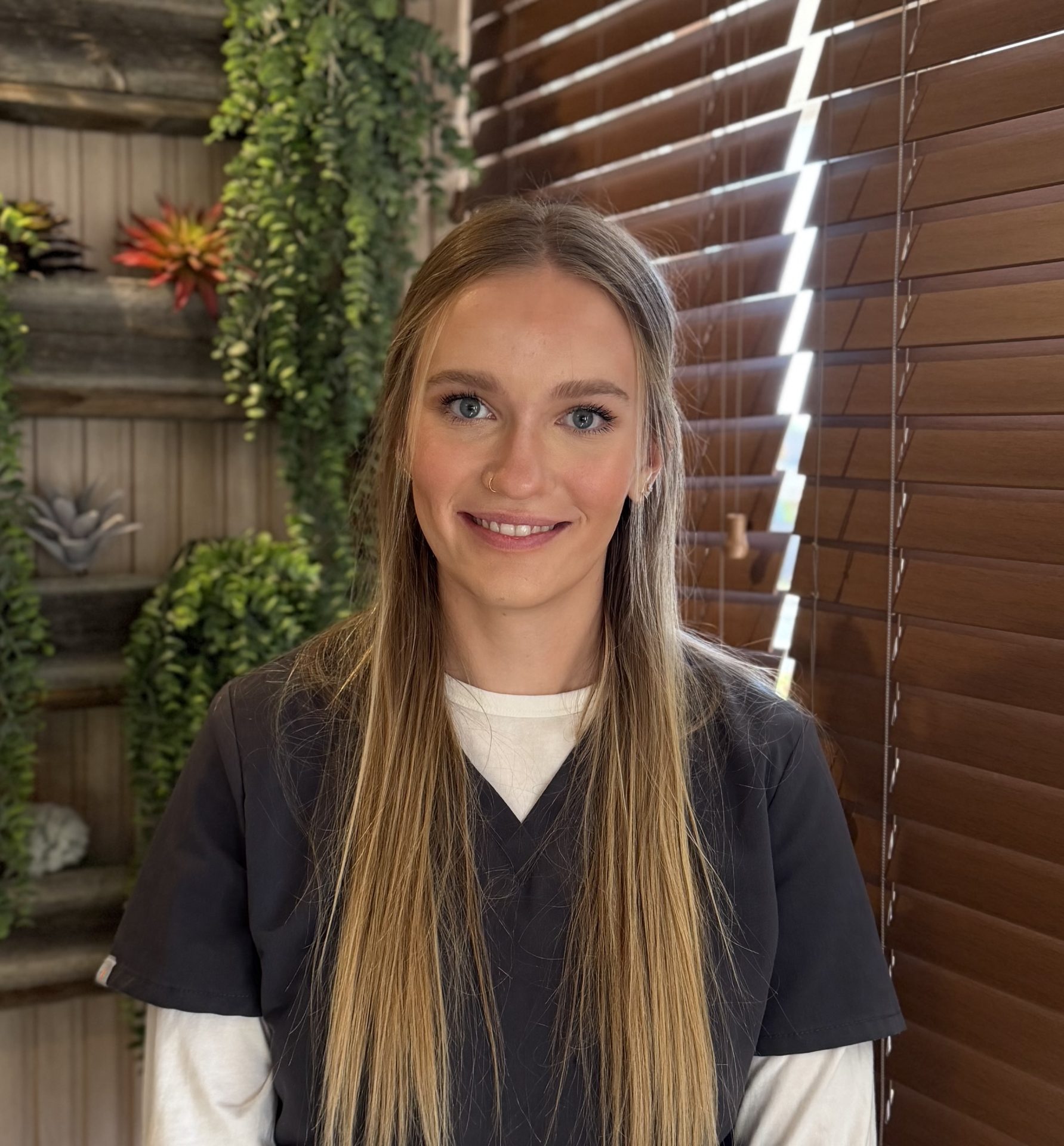
Emma | Chiropractic Technician
Emma is our chiropractic assistant at the clinic. She is currently pursuing her bachelor's degree in Human Development and Family Studies with a minor in Exercise Science at Colorado State University, with plans to become a pediatric occupational therapist. Emma has a passion for healthcare and helping others feel their best, and she enjoys building relationships with patients and being part of their journey toward better health.

Doza | Director of Pawsitive Vibes
Meet our mini Goldendoodle, Doza. Hypoallergenic and endlessly friendly, Doza helps patients feel at ease with her calm presence, happy greetings, and impeccable listening skills.
What Our Patients Say


Watch: Understanding Your Lumbar Disc Bulge
Video summary. In this short video, we walk through what a lumbar disc bulge is, how it differs from a herniation, and why an imaging label is only part of the story. We cover the symptoms people notice most, including lower back pain that radiates into the leg and pain that worsens with sitting, and we flag the warning signs that call for urgent care. Then we explain how we assess each case and build a phased, non-surgical plan focused on calming symptoms, restoring motion, and rebuilding lasting strength.

Free Lumbar Disc Bulge Recovery Guide
Want a clear, calm plan you can hold in your hand? Our free guide breaks down what a bulging disc means and the simple steps that support recovery, so you can move with more confidence starting today.
Inside the guide:
- A plain-language explanation of lumbar disc bulges and how they differ from herniations
- The symptoms and red flags worth knowing
- Everyday positions and gentle movements that tend to help
- What a phased, non-surgical recovery plan looks like
- When it is time to get assessed

Trusted Disc Bulge Care in Longmont
Left Hand Chiropractic Center has served Longmont and nearby communities, including Firestone, Frederick, Niwot, Gunbarrel, Hygiene, Lyons, Mead, and Boulder, since 2010. Patients tell us they appreciate that we listen carefully, get to the root of what is going on, and set honest expectations rather than overpromising.
What your first visit looks like. You will be welcomed and offered a comfortable space to settle in. Your doctor will meet you, talk through what brought you in, and spend the first few minutes simply confirming that our care is a good fit for your situation. If we are confident we can help, we move into a hands-on exam right there in the same room, and you stay fully dressed. You will leave understanding what is going on and what we recommend, with a clear plan for next steps.
If a bulging disc is limiting your days, we would be glad to help you find a path forward.
References and Medical Review
References
- Brinjikji W, Luetmer PH, Comstock B, et al. Systematic literature review of imaging features of spinal degeneration in asymptomatic populations. AJNR Am J Neuroradiol. 2015.
- Qaseem A, Wilt TJ, McLean RM, Forciea MA; Clinical Guidelines Committee of the American College of Physicians. Noninvasive treatments for acute, subacute, and chronic low back pain: a clinical practice guideline from the American College of Physicians. Ann Intern Med. 2017.
- Kreiner DS, Hwang SW, Easa JE, et al. An evidence-based clinical guideline for the diagnosis and treatment of lumbar disc herniation with radiculopathy. North American Spine Society. Spine J. 2014.
- Rubinstein SM, de Zoete A, van Middelkoop M, et al. Benefits and harms of spinal manipulative therapy for the treatment of chronic low back pain: systematic review and meta-analysis of randomised controlled trials. BMJ. 2019.
- Chiu CC, Chuang TY, Chang KH, et al. The probability of spontaneous regression of lumbar herniated disc: a systematic review. Clin Rehabil. 2015.
- Wegner I, Widyahening IS, van Tulder MW, et al. Traction for low-back pain with or without sciatica. Cochrane Database of Systematic Reviews. 2013.
This page is for general education and does not replace an individual evaluation or medical advice. If you have red-flag symptoms, seek urgent care.
Medically reviewed by:
Dr. Christine Illman, DC and Dr. Drew Illman, DC,
Last reviewed: August 14th
Reviewer Credentials: Doctor of Chiropractic, DC
Lumbar Disc Bulge FAQs
Content Reviewed By: Dr. Drew Illman, DC on October 20, 2026
Chiropractic License Number: 6511 (NPI: 1033434931 )
When Should You See a Chiropractor During Pregnancy?
Pregnancy comes with a long list of new sensations, and it is not always obvious which aches call f....Why Does Lower Back Pain Happen During Pregnancy?
If your lower back has started aching now that you are expecting, you are in very good company. Bac....Not sure what kind of care you need?
Start with the Left Hand Method. We will help you understand your options and identify a clear next step, whether that next step is with us or another trusted provider.