
- Quick Answer: What Is Spinal Decompression?
- Understanding Spinal Decompression Therapy
- Symptoms and How They Show Up Day to Day
- What Drives Disc Problems in the First Place
- Red Flags: When to Seek Urgent Care
- What the Research Actually Says
- Patient Case Study
- Ready to Start? Here Is What to Expect
- Meet Your Doctor
- What Our Patients Are Saying
- Watch: Back Pain Down Your Leg? Why It's Usually Not Surgery
- Your Easy Guide to Spinal Decompression
- Take the Quiz Now
- References and Medical Review
- Frequently Asked Questions

Spinal Decompression Treatment in Longmont: Evidence-Based, Non-Surgical Care

Table of Contents
- Quick Answer: What Is Spinal Decompression?
- Understanding Spinal Decompression Therapy
- Symptoms and How They Show Up Day to Day
- What Drives Disc Problems in the First Place
- Red Flags: When to Seek Urgent Care
- What the Research Actually Says
- Patient Case Study
- Ready to Start? Here Is What to Expect
- Meet Your Doctor
- What Our Patients Are Saying
- Watch: Back Pain Down Your Leg? Why It’s Usually Not Surgery
- Your Easy Guide to Spinal Decompression
- Take the Quiz Now
- References and Medical Review
- Frequently Asked Questions
Content Reviewed By: Dr. Drew Illman, DC on September 25, 2026
Chiropractic License Number: 6511 (NPI: 1033434931 )

Quick Answer: What Is Spinal Decompression?
Spinal decompression is a non-surgical therapy that gently stretches the spine using a motorized traction table, creating negative pressure inside the intervertebral discs. That pressure change helps retract bulging or herniated disc material, encourages nutrient-rich fluid back into the disc, and takes irritation off compressed spinal nerves. It is most commonly used for lower back pain, sciatica, herniated discs, degenerative disc disease, and radiating leg or arm pain caused by nerve compression.
At Left Hand Chiropractic Center in Longmont, spinal decompression is one part of a structured, individualized care plan, never a one-size-fits-all solution. If you are experiencing progressive leg weakness, loss of bladder or bowel control, or pain following a significant trauma, please seek emergency care immediately rather than scheduling a chiropractic appointment.
Understanding What Spinal Decompression Therapy Actually Does
Your spine is made up of vertebrae stacked on top of one another, separated by soft, gel-like cushions called intervertebral discs. These discs absorb shock, allow movement, and create the space your spinal nerves need to exit the spine and travel to your arms, legs, and every organ in between. When a disc is compressed, dehydrated, or damaged, it can bulge or herniate into the spinal canal. That encroachment puts pressure on nearby nerve roots, which is what causes the familiar burning, shooting, or aching pain that travels down your leg or into your arm.
Spinal decompression works by precisely and gradually applying a distraction force to specific spinal segments. Using a computerized table, such as the HillDT and KDT systems used at our clinic, the therapy cycles between tension and relaxation phases. During the tension phase, negative pressure is created inside the disc. This draws displaced disc material back toward center, much like a vacuum pulling a flattened balloon back into shape, and encourages oxygen, water, and nutrients to rehydrate the disc tissue. Over a series of treatments, this process supports the body’s natural healing response at the disc level.
Two common myths are worth addressing. The first is that spinal decompression is the same as traction. Standard traction applies a sustained pulling force to the entire lumbar spine. Motorized decompression tables use a logarithmic pull pattern designed to avoid triggering the body’s protective muscle guarding reflex, which makes it both more comfortable and more effective for disc-specific conditions. The second myth is that decompression is a quick fix. Disc injuries respond to consistent, progressive loading over time. Most patients begin to notice changes within the first few weeks, but a complete course of care typically spans several weeks of regular visits, followed by active rehabilitation to protect long-term results.

Symptoms and How They Show Up Day to Day
The symptoms most commonly associated with disc problems and nerve compression do not always stay in one place. They travel, they shift, and they often behave differently depending on what you are doing.
Common symptoms that may indicate a disc or nerve issue:
- Dull, aching lower back pain that worsens after sitting for long periods
- Sharp or burning pain that radiates from the lower back into the buttock, hip, or down one leg (sciatica)
- Neck pain that radiates into the shoulder, arm, or hand
- Tingling or numbness in the fingers, hands, feet, or toes
- A feeling of weakness in one leg or arm that makes walking, climbing stairs, or gripping objects harder than it should be
- Pain that eases when lying down but returns quickly when you stand or walk
- Stiffness first thing in the morning that gradually improves with movement
Patterns that tend to make things worse:
- Sitting for extended periods, especially in a car or at a desk
- Bending forward to pick things up off the floor
- Coughing or sneezing, which briefly spikes pressure inside the disc
- Standing for long stretches without the ability to shift position
Patterns that tend to provide relief:
- Lying on your back with your knees bent and supported
- Gentle walking, which intermittently loads and unloads the disc
- Changing positions frequently rather than holding any one posture for too long
How this affects real life:
Patients dealing with disc-related pain often describe disrupted sleep because no position feels comfortable. They avoid bending over to tie their shoes, struggle to sit through a full workday, and pull back from physical activities they used to enjoy, whether that is hiking near Lyons, cycling on the Boulder Creek Path, or simply keeping up with their kids. Over time, that restriction compounds. The less you move, the more the supporting muscles weaken, which puts more load back on the disc.
 Mechanical load and disc degeneration
What Drives Disc Problems in the First Place
Understanding why disc problems develop is part of how we build a care plan that actually holds. Most people want to know: why did this happen to me? The honest answer is usually a combination of factors, not a single cause.
Mechanical and load factors play the largest role. Discs rely on movement to stay healthy. They do not have their own blood supply in adulthood. Instead, they receive oxygen and nutrients through a process called imbibition, essentially absorbing fluid during cycles of loading and unloading with movement. Sustained compression from prolonged sitting, repetitive forward bending, heavy lifting with poor mechanics, or awkward postures at work all reduce that fluid exchange and accelerate disc wear over time.
Degenerative changes are a natural part of aging, but they do not have to be painful. Research consistently shows that disc bulges, herniations, and even moderate degeneration are often found on imaging in people who have no pain at all. The issue is not always the structural change itself. It is how that change interacts with your movement habits, your muscle support system, and the overall load your spine is being asked to manage.
 Lifestyle and capacity mismatch disc
Lifestyle contributors matter more than most people expect. Sedentary work environments, inadequate hydration, poor sleep quality, excess body weight, and smoking have all been associated with accelerated disc degeneration and higher rates of chronic low back pain. These are not reasons to feel blamed. They are reasons to feel empowered, because most of them are modifiable.
Capacity mismatches occur when your spine is asked to do more than it is currently prepared to handle. A weekend of heavy yardwork after months at a desk. A sudden return to a sport after a long break. A new job that involves sustained lifting. In these situations, the spine is not weak. It is simply underprepared for the demand placed on it. Building that capacity back up, gradually and deliberately, is where rehabilitation fits in.
Red Flags: When to Seek Urgent Care Rather Than a Chiropractic Visit
At Left Hand Chiropractic Center, we take medical safety seriously. Not every back or neck problem is appropriate for conservative care, and we would rather tell you that clearly on day one than put you through care that is not right for your situation.
Please go to an emergency room or call 911 immediately if you are experiencing any of the following:
- Loss of bladder or bowel control alongside back or leg pain (this may indicate cauda equina syndrome, a medical emergency)
- Rapidly progressing weakness in both legs
- Back pain that developed immediately following a significant trauma, such as a fall from height, a motor vehicle accident, or a direct blow to the spine
- Severe, unrelenting pain that does not change with any position change and is waking you from sleep consistently
- Back pain accompanied by unexplained fever, chills, recent significant weight loss, or a history of cancer
Seek prompt medical evaluation (within 24 to 48 hours) if you notice:
- Progressive weakness in one arm or leg that is getting worse, not staying the same
- Numbness that is spreading rather than staying in one area
- Symptoms that began after a recent infection or immune-compromising illness
If you are uncertain whether your symptoms qualify as urgent, call us at (303) 651-7003 and we will help you determine the right next step. We would rather answer that question for you over the phone than have you wait on a problem that needs immediate attention.
 Chiropractic disc treatment phase 1 infographic
Your Personalized Treatment Plan
No two spines are alike, and no two care plans at Left Hand Chiropractic Center are either. What follows is the general framework we use to guide care for patients with disc-related conditions, organized into phases that build on one another. Where you start, and how long each phase takes, depends on your specific presentation.
Phase 1: Calm the Irritation
In the early phase, the primary goal is pain reduction and neurological settling. When nerve tissue is actively irritated, exercises and aggressive manual therapy can make things worse, not better. During this phase, spinal decompression is often the central tool. Sessions are gentle, progressively dosed, and designed to take pressure off the affected disc and nerve. We may also use cold laser therapy to support tissue-level inflammation reduction, and we will guide you through simple positional strategies and mobility work you can do at home to avoid re-irritating the area between visits.
 Chiropractic disc treatment phase 2 infographic
Phase 2: Restore Motion and Mobility
As symptoms settle and the nerve calms down, we shift focus to restoring healthy movement patterns. The spine needs to move well in all planes to distribute load effectively. This phase typically introduces targeted spinal mobilization or chiropractic adjustments, progressive range of motion work, and the beginning of neuromuscular re-education to help your stabilizing muscles start doing their job again. Many patients notice that this is where their functional capacity begins to return, getting back to basic daily tasks with less pain and more confidence.
 Chiropractic disc treatment phase 3 infographic
Phase 3: Rebuild Capacity and Stability
A disc that has been through a significant injury is more vulnerable to re-injury if the surrounding support system is not rebuilt. This phase focuses on progressive loading of the spine through structured rehabilitation exercises, with an emphasis on core and hip control, movement pattern quality, and building tolerance to the activities that matter most to you. Whether that means returning to trail running in the Flatirons or simply being able to sit through a full workday, we build toward your specific goals.
 Chiropractic disc treatment phase 4 infographic
Phase 4: Return to Full Activity and Maintain Your Gains
The final phase is about transition and sustainability. We support your return to recreational activities, sport, or occupational demands with appropriate progression, and we give you the tools to manage your spine independently. Some patients choose periodic maintenance visits after completing care. Others graduate with a strong home program and check back in if anything flares. Either way, you leave with clarity on what to do if symptoms return and how to protect the progress you have made.

Adjunct Technologies We May Use (Based on Your Case)
Spinal Decompression (HillDT and KDT Tables): Our primary tool for disc-related nerve compression. Computerized distraction reduces intradiscal pressure and supports tissue rehydration across a series of sessions.
Cold Laser Therapy (Chattanooga): Uses specific wavelengths of light to reduce inflammation and support cellular repair at the tissue level. Particularly useful in the early phase when pain levels are high.
Shockwave Therapy: Pulsed radial acoustic waves that can help address secondary muscle involvement, myofascial restriction, and associated soft tissue changes. Used on an indication basis when manual tissue release alone is insufficient.
Chiropractic Adjustments: Applied selectively based on your presentation. Not every patient with a disc problem needs a traditional adjustment, and we will not perform one unless it is clearly appropriate and safe for your case.
Clinical note: We do not use every tool with every patient. What you receive will be determined by your assessment findings, your response to care, and your goals. If something is not working, we adjust. Transparency and communication are part of how we practice.
What the Research Actually Says About Spinal Decompression
We believe you deserve honest information about the evidence behind any treatment we offer. Spinal decompression has a growing research base, and here is a plain-language summary of what that literature suggests and where its limitations lie.
- Randomized controlled trial evidence on motorized lumbar decompression suggests meaningful reductions in pain and disability in patients with lumbar disc herniation and radiculopathy compared to sham treatment. These findings are most consistent in patients with confirmed disc-related nerve root involvement. Limitation: many trials have small sample sizes, and long-term follow-up data beyond 12 months is limited.
- A systematic review published in the Journal of Physical Therapy Science found that non-surgical spinal decompression produced statistically significant reductions in pain scores and improvements in functional ability in patients with chronic low back pain and disc herniation. Limitation: the authors noted variability in treatment protocols across studies, making direct comparisons difficult.
- Clinical guidelines from the American College of Physicians recommend non-pharmacological, non-surgical interventions as the preferred first-line approach for chronic low back pain, including therapies that address disc-mediated pain. Spinal decompression fits within this framework when appropriately selected. Limitation: guidelines do not specifically name decompression as a standalone recommendation, as the broader category of spinal manipulation and traction therapies is addressed.
- MRI-based evidence has demonstrated measurable reductions in disc herniation volume following courses of spinal decompression therapy in several case series. This provides a plausible structural mechanism for reported symptom improvement. Limitation: case series do not establish causation in the same way randomized trials do.
- Head-to-head comparison data suggests that spinal decompression combined with exercise rehabilitation produces better outcomes than decompression alone. This is why we do not offer decompression as a standalone service. It works best as part of a coordinated care plan that includes active patient participation.
The honest summary: spinal decompression has a reasonable and growing evidence base for disc-related conditions, and it is appropriate for many patients who are candidates. It is not a guaranteed outcome for everyone, and we will tell you honestly if we do not think you are a good fit for it after your assessment.

A Patient's Journey: From Radiating Leg Pain to Getting Back on the Trail
The following is a de-identified composite case for illustrative purposes. Individual results vary.
Patient profile: A 47-year-old male office worker and recreational trail runner from the Longmont area, presenting with a 6-week history of right-sided lower back pain with radiating pain and numbness into the right leg, extending to the calf.
Baseline limitations: Unable to sit for more than 20 minutes without significant pain. Sleep disrupted 3 to 4 times per week. Had stopped running entirely due to fear of aggravating symptoms. Reporting a 7 out of 10 pain level on average.
Assessment findings: Positive straight leg raise at 45 degrees on the right. Mild right ankle dorsiflexion weakness. Dermatomal numbness along the L5 distribution. Referred for MRI, which confirmed a right paracentral disc herniation at L4-L5 with moderate nerve root contact.
Plan duration: 10-week initial phase, 3 visits per week for the first four weeks, tapering to 2 visits per week for the remaining six weeks.
Interventions used: Spinal decompression (HillDT table, 15-minute sessions with progressive tension), cold laser therapy during early visits, spinal mobilization beginning week 3, progressive core and hip stabilization exercises introduced at week 4.
Week 2: Pain level reduced to 5 out of 10. Able to sit for 35 to 40 minutes. Leg tingling began to recede from the calf, remaining primarily in the outer thigh.
Week 4: Pain level at 3 out of 10. Sleeping through the night most nights. Neurological symptoms continuing to centralize toward the lower back, which is a positive clinical sign. Began light walking program.
Week 8 and beyond: Pain level at 1 to 2 out of 10 on most days. Returned to flat trail running with a graduated plan. Full neurological exam showed resolution of ankle weakness and significant improvement in sensation. MRI was not repeated at this stage, as functional outcomes were the primary measure.
Outcome metrics: Pain reduced by approximately 75%. Full return to occupational sitting tolerance. Return to recreational running within 10 weeks. Patient reported feeling confident managing the condition independently.
Maintenance plan: Monthly maintenance visits for 3 months post-discharge, along with a structured home exercise program focused on hip and core loading. Patient was educated on activity modifications to reduce recurrence risk.
Ready to Get Answers? Here Is What Happens at Your First Visit
If you have been living with disc-related pain, radiating leg symptoms, or that familiar ache that never fully goes away, you deserve a clear picture of what is happening and what your options actually are.
At Left Hand Chiropractic Center, your first visit is not a sales pitch. It is a conversation followed by a thorough assessment. We listen first, assess carefully, and give you an honest recommendation. If we are not the right fit for what you need, we will tell you that directly and help point you toward who is.
Here is what to expect:
You will walk into a bright, welcoming space and be greeted by our front desk team. Your doctor will meet you in the lobby, walk you back to a private room, and take the time to understand what is going on before anything else happens. We will explain what the assessment involves, answer your questions, and give you our clinical impression the same day. No guessing, no vague answers, no hard pressure.
Serving Longmont, Firestone, Frederick, Niwot, Gunbarrel, Hygiene, Lyons, Mead, Boulder, and the surrounding communities of Boulder County.
Call us at (303) 651-7003 or book online anytime.
Left Hand Chiropractic Center 1304 Vivian St., Longmont, CO 80501
Monday through Thursday: 9:00 AM to 5:00 PM
Friday: 9:00 AM to 12:00 PM
Meet The Team

Dr. Christine Illman, DC | Chiropractor & Co-Owner
Dr. Christine is known for her focused, supportive care for pregnancy, postpartum, and pediatric chiropractic, with advanced training that helps moms and kids feel more comfortable and more confident in their bodies. She is Webster Technique certified and has completed additional pediatric and prenatal training through the International Chiropractic Pediatric Association (ICPA). Dr. Christine also specializes in working with neck pain, headaches, and migraines, and brings a calm, capable energy to every visit

Dr. Drew Illman, DC | Chiropractor & Co-Owner
Dr. Drew blends traditional chiropractic with a whole-body approach that supports both performance and long-term health. He works closely with athletes of all levels, including professional cyclists and world champions, and he is widely known for his expertise in Endonasal Balloon Therapy, supported by ongoing learning and collaboration with global practitioners. He also integrates functional medicine thinking when appropriate, aiming to understand root causes and support stronger systems, not just short-term symptom relief.

Dr. Pat Larabee, DC | Chiropractor
Dr. Patrick Larabee brings over 30 years of experience in chiropractic care and more than two decades as a Professor of Anatomy & Physiology. His career has been deeply rooted in health, fitness, and human performance—first as an athlete and coach, and later as a trusted mentor to patient athletes of all ages and levels. Dr. Larabee has played a key role in helping patients and athletes build strong foundations for pain free movement and life. His approach blends deep anatomical & physiological knowledge with real-world chiropractic & athletic experience. A USA Cycling Level 1 Coach and two-time Masters National Track Cycling Champion, Dr. Larabee has competed across a wide range of sports including volleyball, track and field, powerlifting, bodybuilding, and cycling. He continues to compete at the national and world level in track cycling, bringing current, high-performance insight to every patient & athlete he works with.

Renee | Office Manager
With a background in healthcare office management and surgical coordination, Renee brings a caring and personal approach to her role as Office Manager. She truly enjoys getting to know each patient and building meaningful relationships along the way. Renee is passionate about creating a welcoming environment where patients feel heard, cared for, and confident that they are in good hands.

Erin | Front Desk Administrator
Erin manages the front desk at the clinic and is often the first friendly face you will be greeted by. She oversees the schedule, answers phone calls and emails, and ensures our clients are taken care of. With a Bachelor's degree in Human Environmental Science and a minor in Food and Nutrition, Erin has spent the last 10 years working in the fitness and health industry. Aside from her front desk duties, she will be assisting patients with their rehab exercises to help them get the most out of their treatments. Her passion lies in health and wellness and she believes that caring for the body is one of the best investments people can make for their overall quality of life.
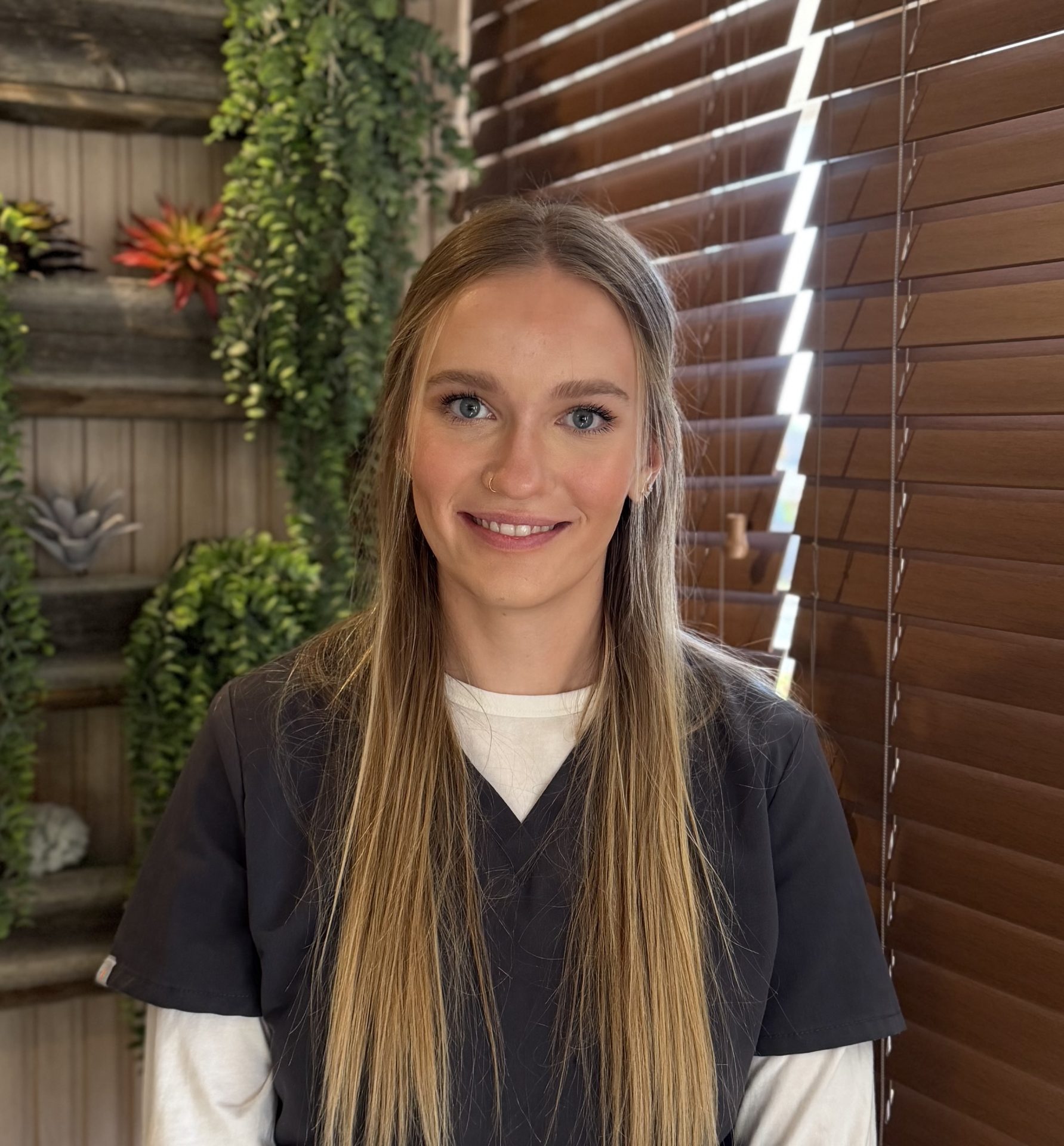
Emma | Chiropractic Technician
Emma is our chiropractic assistant at the clinic. She is currently pursuing her bachelor's degree in Human Development and Family Studies with a minor in Exercise Science at Colorado State University, with plans to become a pediatric occupational therapist. Emma has a passion for healthcare and helping others feel their best, and she enjoys building relationships with patients and being part of their journey toward better health.

Doza | Director of Pawsitive Vibes
Meet our mini Goldendoodle, Doza. Hypoallergenic and endlessly friendly, Doza helps patients feel at ease with her calm presence, happy greetings, and impeccable listening skills.
What Our Patients Are Saying


Back Pain Down Your Leg? Why It’s Usually Not Surgery
Video Summary: Back pain that shoots down your leg often involves a disc, but that rarely means surgery. In this video, Dr. Drew & Dr. Christine Illman of Left Hand Chiropractic Center in Longmont walks through how spinal decompression actually works, who it helps, and what a real course of care looks like. You’ll learn what happens inside a disc during decompression, why it’s different from traction, how the pain cycle keeps people stuck, and the honest red flags that mean you should head to an ER first. Dr. Drew & Dr. Christine also breaks down the four phases of care and shares a real case snapshot of a trail runner who got back on the trail.

Your Easy Guide to Spinal Decompression
Living with disc pain is exhausting. Understanding your options should not be. This straightforward guide covers everything to know before your first visit, so you arrive prepared and leave with a clear plan.
Your free guide includes:
- How discs work and why herniations happen
- Which conditions respond best to spinal decompression
- What happens at your first assessment with us
- The right questions to ask before starting care
- A symptom log for your first four weeks of treatment
- Warning signs that mean you should escalate care
Find Out if Spinal Decompression Can Help You
References and Medical Review
References:
- Apfel CC, Cakmakkaya OS, Martin W, et al. Restoration of disk height through non-surgical spinal decompression is associated with decreased discogenic low back pain: a retrospective cohort study. BMC Musculoskeletal Disorders. 2010;11:155.
- Chung-Hsun C, et al. Effectiveness of non-surgical spinal decompression for the treatment of chronic low back pain: a systematic review. Journal of Physical Therapy Science. 2017.
- Qaseem A, Wilt TJ, McLean RM, Forciea MA; Clinical Guidelines Committee of the American College of Physicians. Noninvasive treatments for acute, subacute, and chronic low back pain: a clinical practice guideline from the American College of Physicians. Annals of Internal Medicine. 2017;166(7):514-530.
- Ramos G, Martin W. Effects of vertebral axial decompression on intradiscal pressure. Journal of Neurosurgery. 1994;81(3):350-353.
- Macario A, Richmond C, Auster M, Pergolizzi JV. Treatment of 94 outpatients with chronic discogenic low back pain with the DRX9000: a retrospective chart review. Pain Practice. 2008;8(1):11-17.
- Hahne AJ, Ford JJ, McMeeken JM. Conservative management of lumbar disc herniation with associated radiculopathy: a systematic review. Spine. 2010;35(11):E488-504.
Medically Reviewed by: Dr. Chris , Left Hand Chiropractic Center
Last Reviewed: May 2026
Next Scheduled Review: May 2027
This content is intended for informational purposes only and does not constitute medical advice. Always consult a qualified healthcare provider regarding your individual health situation.
Frequently Asked Questions About Spinal Decompression
Transparency builds trust — we’re here to help you understand your care before, during, and after treatment.
Content Reviewed By: Dr. Drew Illman, DC on September 25, 2026
Chiropractic License Number: 6511 (NPI: 1033434931 )
When Should You See a Chiropractor During Pregnancy?
Pregnancy comes with a long list of new sensations, and it is not always obvious which aches call f....Why Does Lower Back Pain Happen During Pregnancy?
If your lower back has started aching now that you are expecting, you are in very good company. Bac....Not sure what kind of care you need?
Start with the Left Hand Method. We will help you understand your options and identify a clear next step, whether that next step is with us or another trusted provider.